1992.09 -- 1996.07,重庆建筑大学管理学院工程管理专业,本科;
1996.09 -- 1999.05,重庆建筑大学管理学院管理科学与工程专业,硕士;
1999.05 -- 2003.03,香港理工大学建筑与房地产学院,博士

 |
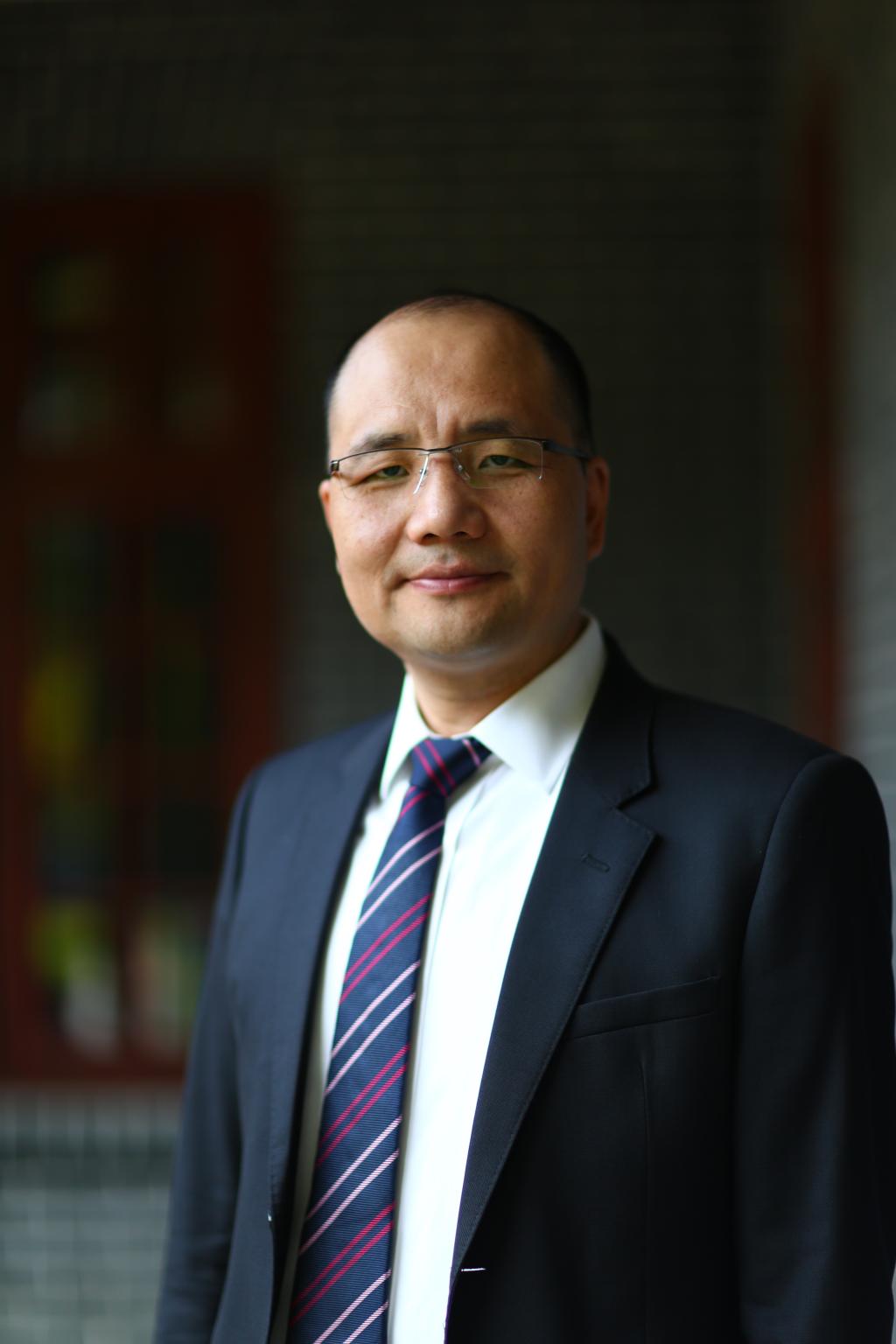
系所:工程管理系
职称:教授、博士生导师
现任职务:重庆大学党委常委、副校长
办公房间:
邮箱:gwliu@cqu.edu.cn
办公电话:023-65120976
1992.09 -- 1996.07,重庆建筑大学管理学院工程管理专业,本科;
1996.09 -- 1999.05,重庆建筑大学管理学院管理科学与工程专业,硕士;
1999.05 -- 2003.03,香港理工大学建筑与房地产学院,博士
2003.07 -- 2005.07, 重庆大学建设管理与房地产,副教授;
2005.07 -- 2008.07, 重庆大学建设管理与房地产学院,副院长、副教授;
2008.07 -- 2012.07, 重庆大学建设管理与房地产学院,副院长、教授、博士生导师;
2012.07 -- 2015.10,重庆大学国际合作与交流处,处长、教授、博士生导师;
2015.11 -- 2022.03,重庆大学管理科学与房地产学院,院长、教授、博士生导师 ;
2021.12--至今,重庆大学副校长、教授、博士生导师。
住房和城乡建设部科学技术委员会住房和房地产专业委员会委员;
教育部高等学校管理科学与工程类专业教学指导委员会工程管理和工程造价专业教学指导分委员会副主任委员;
第六届住房和城乡建设部高等教育工程管理专业评估委员会副主任委员;
全国工程管理专业学位研究生教育指导委员会委员
城市更新与可持续建设管理;
城市发展与房地产项目策划;
建筑产业化;
建筑信息化与智慧城市;
其它方向:价值工程与价值管理,建筑业发展研究与建筑经济,包括建筑业整体发展形势、建筑业生产效率与人力资源研究等。
(1)发表论文
在SCI/SSCI/CSSCI发表论文130余篇。部分代表性论文如下:
[1] Zhuang, T., Yi, H., Wu, H., Zhang, Y., Fu, X., & Liu, G. (2025). Dissecting transaction costs in neighborhood regeneration decision-making: Case studies in chongqing, china. Habitat International, 160, 103401.
[2] Huang, R., Qian, Q. K., Liu, G., Li, K., Visscher, H. J., Fu, X., & Wang, W. (2025). Multi-level social capital effects on residents: Residents’ cooperative behavior in neighborhood renewal in China. Land Use Policy, 148, 107383.
[3] Liu, J., Liu, G., Wang, N., & Jiang, Y. (2025). Screening for anomalous safety condition among existing buildings using explainable machine learning. Structural Control and Health Monitoring, 2025(1),
[4] Liu, G., Yang, Y., Li, K., Shrestha, A., & Zhuang, T. (2025). Prosperity or futility? Effects of micro-regeneration on neighborhood commercial vitality. Engineering Construction and Architectural Management, 32(6), 3779–3803.
[5] Cui, W., Liu, G., Hong, J., & Li, K. (2024). A novel hybrid method integrating multi-objective optimization with emergy analysis for building renewal strategy. Energy Conversion and Management, 315, 118792.
[6] Liu, G., Qin, Z., Wu, H., Jia, L., & Zhuo, J. (2025). Optimizing process efficiency in prefabricated building supply chain: The role of hybrid governance behaviors in reducing transaction costs. Engineering Construction and Architectural Management.
[7] Feng, S., Liu, G., Shan, T., Li, K., & Lai, S. (2024). Predicting green technology innovation in the construction field from a technology convergence perspective: A two-stage predictive approach based on interpretable machine learning. Journal of Environmental Management, 372, 123203.
[8] 庄陶之,袁梦,刘贵文. 房价、租金二元视角下的城市更新外部经济效应研究——以重庆实证案例为基础 [J]. 城市发展研究, 2024, 31 (01): 121-128.
[9] Liu, G., Liu, J., Wang, N., Pan, M., Tan, Y., & Zhang, Y. (2025). A machine learning-aided framework for hierarchical management of building structural safety. Engineering Construction and Architectural Management.
[10] Liu, G., Huang, R., Li, K., Shrestha, A., Wang, H., & Cai, M. (2024). Exploring the dilemma of enterprises participating in the old community renewal: Perspective of managers. Cities, 150, 105073.
[11] Dan, Y., & Liu, G. (2024). Integrated scheduling optimization of production and transportation for precast component with delivery time window. Engineering Construction and Architectural Management, 31(8), 3335–3355.
[12] Dan, Y., Liu, G., Mao, C., Li, K., & Xu, P. (2024). Flowshop scheduling optimization for multi-shift precast production with on-time delivery. Engineering Applications of Artificial Intelligence, 127, 107163.
[13] Liu, G., Zhang, Y., Zhuang, T., Yi, H., Cao, Z., Wu, H., & Fu, X. (2024). Deciphering trust in grassroots government for vibrant resident participation in neighborhood regeneration: An empirical study in China’s top-down governance system. Cities, 152, 105244.
[14] Cui, W., Liu, G., Wang, Y., & Li, K. (2024). Integrated optimization of the building envelope and the HVAC system in office building retrofitting. Case Studies in Thermal Engineering, 62, 105185.
[15] Liu, G., Yang, Y., Li, K., Shrestha, A., & Zhuang, T. (2024). Prosperity or futility? Effects of micro-regeneration on neighborhood commercial vitality. Engineering Construction and Architectural Management.
[16] Fu, X., Liu, G., Wu, H., Zhuang, T., Huang, R., Yuan, F., & Zhang, Y. (2024). Dissecting behavioral inertia in shaping different resident participation behaviors in neighborhood regeneration: A quantitative behavioral experiment. Environmental Impact Assessment Review, 109, 107632.
[17] Fu, X., Qian, Q. K., Liu, G., Zhuang, T., Visscher, H. J., & Huang, R. (2023). Overcoming inertia for sustainable urban development: Understanding the role of stimuli in shaping residents’ participation behaviors in neighborhood regeneration projects in China. Environmental Impact Assessment Review, 103, 107252.
[18] 刘贵文,黄若鹏,符馨月. 城市更新破局之思——从“大修大改”到“空间精细化管理” [J]. 城市发展研究, 2023, 30 (07): 73-78.
[19] Huang, R., Liu, G., Li, K., Liu, Z., Fu, X., & Wen, J. (2023). Evolution of residents’ cooperative behavior in neighborhood renewal: An agent-based computational approach. Computers, Environment and Urban Systems, 105, 102022.
[20] Chen, Y., Liu, G., & Zhuang, T. (2023). How to promote urban regeneration projects? An area-wide portfolio selection approach considering interaction effects and multiple objectives. Environmental Impact Assessment Review, 103, 107283.
[21] Chen, Y., Zhuang, T., & Liu, G. (2023). A hybrid approach to supporting physical-change-based renewal projects selection decisions in high-density city: A case study of chongqing. Engineering Construction and Architectural Management, 30(7), 2879–2903.
[22] Huang, R., Liu, G., Li, K., Shrestha, A., Fu, X., You, K., & Deng, X. (2023). How to utilize neighborship: The role of residents’ social capital in the neighborhood renewal in China. Environmental Impact Assessment Review, 103, 107273.
[23] Zhang, Z., Liu, Y., & Liu, G. (2022). Rethinking growth coalition in urban village redevelopment: An empirical study of three villages in zhuhai, china. Habitat International, 121, 102529.
[24] Liu, Y., Yao, F., Ji, Y., Tong, W., Liu, G., Li, H. X., & Hu, X. (2022). Quality control for offsite construction: Review and future directions. Journal of Construction Engineering Management, 148(8), 3122003.
[25] Liu, G., Fu, X., Zhuang, T., Huang, R., & Wu, H. (2022). Provincial performance assessment of neighborhood regeneration based on a super-SBM model and the malmquist indices: A China study. Sustainable Production and Consumption, 32, 593–606.
[26] Liu, G., Huang, R., Li, K., Shrestha, A., & Fu, X. (2022). Greenhouse gas emissions management in prefabrication and modular construction based on earned value management. Journal of Construction Engineering Management, 148(6), 4022034.
[27] Cheng, J., Mao, C., Huang, Z., Hong, J., & Liu, G. (2022). Implementation strategies for sustainable renewal at the neighborhood level with the goal of reducing carbon emission. Sustainable Cities and Society, 85, 104047.
[28] Huang, R., Li, K., Liu, G., Shrestha, A., Chang, R., & Tang, X. (2022). A bi-level model and hybrid heuristic algorithm for the optimal location of prefabricated building industrial park. Engineering Applications of Artificial Intelligence, 116, 105393.
[29] Ma, X., Mao, C., & Liu, G. (2022). Can robots replace human beings? -Assessment on the developmental potential of construction robot. Journal of Building Engineering, 56,
[30] 韩青叶,赖莎,刘贵文. 城市历史街区更新的融资冲突建模及政策设计 [J]. 城市发展研究, 2022, 29 (02): 1-6+11.
[31] Yao, F., Ji, Y., Tong, W., Li, H. X., & Liu, G. (2021). Sensing technology based quality control and warning systems for sleeve grouting of prefabricated buildings. Automation in Construction, 123, 103537.
[32] Dan, Y., Liu, G., & Fu, Y. (2021). Optimized flowshop scheduling for precast production considering process connection and blocking. Automation in Construction, 125, 103575.
[33] Liu, G., Fu, X., Han, Q., Huang, R., & Zhuang, T. (2021). Research on the collaborative governance of urban regeneration based on a bayesian network: The case of chongqing. Land Use Policy, 109, 105640.
[34] Gu, J., Wang, X., & Liu, G. (2021). Rediscovering the amenity value of urban landscapes in the mountainous areas with high-rise buildings from the perspective of 3D vertical urban systems. Urban Forestry & Urban Greening, 60, 127018.
[35] Tang, M., Hong, J., Guo, S., Liu, G., & Shen, G. Q. (2021). A bibliometric review of urban energy metabolism: Evolutionary trends and the application of network analytical methods. Journal of Cleaner Production, 279, 123403.
[36] Su, Y., Mao, C., Jiang, R., Liu, G., & Wang, J. (2021). Data-driven fire safety management at building construction sites: Leveraging CNN. Journal of Management in Engineering, 37(2), 4020108.
(2)出版著作
[1]毛超,刘贵文.(2024).智慧建造概论. 重庆: 重庆大学出版社.
[2]刘贵文,毛超,徐鹏鹏,傅晏, & 李凯健.(2021).工业化建筑全产业链主要材料和部品清单及碳排放测算手册(装配式混凝土建筑). 重庆:重庆大学出版社.
[3]刘贵文, 李凯健, & 徐鹏鹏. (2019). 建筑节能减排标准体系研究. 北京:中国建筑工业出版社.
[4]刘贵文,申立银.(2018).建设管理研究. 重庆:重庆大学出版社
[5]刘贵文. (2018). 全国房地产优秀案例. 北京:中国建筑工业出版社.
[6]刘贵文, 沈岐平, & 徐鹏鹏. (2013). 基于价值管理的公共工程决策机制改进研究. 重庆:重庆大学出版社.
[7]任宏、刘贵文.(2013).《新思路、新探索、新模式:重庆统筹城乡发展实践》.重庆:重庆大学出版社.
[8]沈岐平, & 刘贵文. (2008). 建设项目价值管理:理论与实践. 北京:中国水利水电出版社, & 知识产权出版社.
[9]任宏, 竹隰生, 刘贵文, & 曹跃进. (2004). 建设工程成本计划与控制. 北京:高等教育出版社.
[1]国家自然科学基金面上项目,面向价值协同的老旧小区改造项目前期大群体决策研究,2023/01-2026/12,在研,主持人:刘贵文
[2]国家社会科学基金重点项目,建筑节能减排标准体系研究,2012/09-2018/08,已结题,主持人:刘贵文
[3]国家社会科学基金西部项目,基于价值管理的公共工程决策机制研究,2007/08-2008/08,已结题,主持人:刘贵文
[4]国家“十三五”重点研发计划项目课题,工业化建筑全产业链能耗及碳排放监测与测算技术,2016-10至2020-06,已结题,课题负责人:刘贵文
[5]中国工程院咨询研究项目,中国建筑绿色建造战略与实施路径研究,2019-12至2021-01,已结题,主持人:刘贵文
[6]中国工程院咨询研究项目,中国绿色建造工程,2019-03至2021-03,已结题,主持人:刘贵文
[7]中国工程院咨询研究项目,中国工程院战略研究与咨询项目/工程建造,核心成员:刘贵文
[8]教育部新世纪优秀人才支持计划项目,延长我国城市建筑使用寿命研究,2013-09至2016-04,已结题,主持人:刘贵文
[9]中华人民共和国住房和城乡建设部省部级项目,推进房地产开发企业兼并重组研究,2016-10至2016-12,已结题,主持人:刘贵文
[10]重庆市科学技术局英才计划项目,城市更新项目大群体决策研究,2021/05-2022/12,负责人:刘贵文
[11]重庆市社科规划办哲学社会科学规划研究项目,城市更新治理体系研究,2021/04,已结题,负责人:刘贵文
[12]重庆市建设科技计划项目,城镇老旧小区改造中的投融资探索,2021-10至2022-6,已结题,主持人:刘贵文
[13]重庆市建设科技计划项目,城市更新工作机制对比与典型案例研究,2020-12至2021-10,已结题,主持人:刘贵文
[14]重庆市建设科技计划项目,老旧小区改造的内容标准及管理机制研究,2019-12至2020-10,已结题,主持人:刘贵文
[15]重庆市建设科技计划项目,城市老旧功能片区改造提升研究,2019-12至2020-10,已结题,主持人:刘贵文
[16]重庆市规划和自然资源局调研项目,老旧住宅小区改造提升长效机制研究,2018-07至2019-01,已结题,主持人:刘贵文
[17]重庆市住房和城乡建设委员会人文社科及软科学项目,促进重庆市建筑业发展研究,2012-03至2012-12,已结题,主持人:刘贵文
[18]重庆市发展与改革委员会软科学研究计划项目,重庆市“十二五”积极发展房地产业研究,2009-11至2010-01,已结题,主持人:刘贵文
[19]重庆市科学技术局软科学研究计划项目,重庆市都市区旧城改造策略研究,2009-07至2010-07,已结题,主持人:刘贵文
[20]重庆市科学技术局软科学研究计划项目,创新型城市建设指标体系与评价方法研究,2007-01至2008-07,已结题,主持人:刘贵文
[21]重庆市科学技术局自然科学基金,基于价值管理的公共工程管理创新研究,2006-10至2008-10,已结题,主持人:刘贵文
1.荣誉头衔
教育部新世纪优秀人才
重庆英才·名家名师 2019年
教书育人楷模 2019年
重庆大学2017年度科研后备拔尖人才培养计划-领军人才
重庆市高校中青年骨干教师称号 2008年
重庆市学术技术带头人后备人选 2008年
优秀青年教师奖 2004年
2.获奖成果
2023年华夏建设科学技术奖二等奖
2022年国家级教学成果奖二等奖
2022年重庆市第十一次社会科学优秀成果一等奖
2021年重庆市教学成果奖特等奖
2020年重庆市科学技术奖科技进步奖三等奖
2020年重庆市第七届发展研究奖三等奖
2018年国家级教学成果奖二等奖
2017年重庆大学教学成果二等奖
2009年重庆市高等教育教学成果一等奖
2009年国家级教学成果奖二等奖
2005年双语教学讲课比赛三等奖
